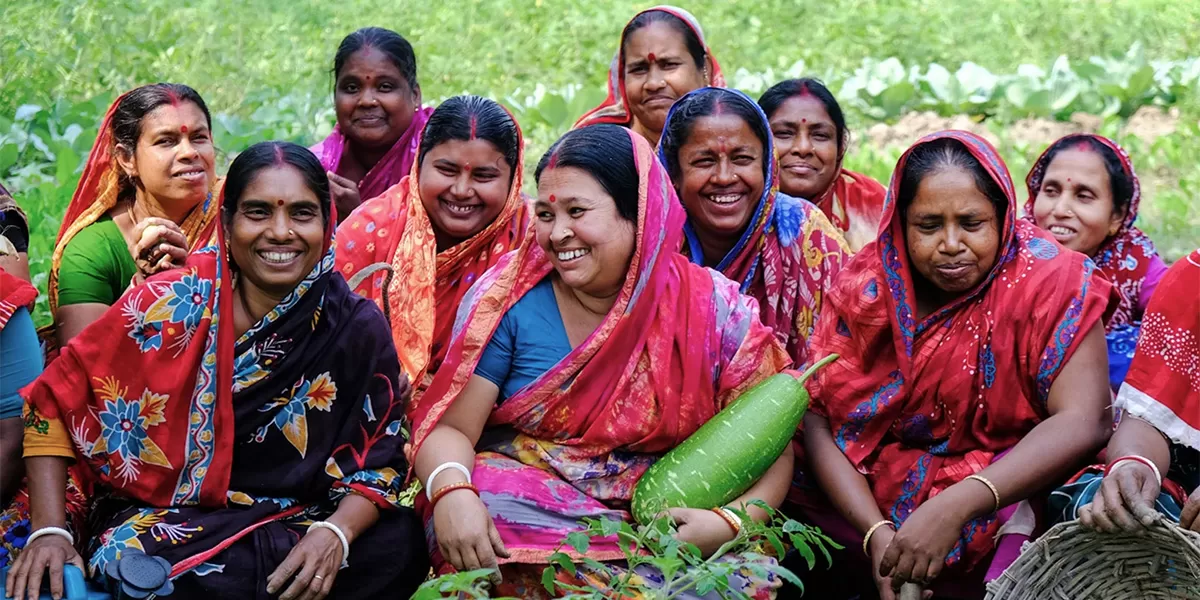
Woman in Bangladesh
Khulna, Satkhira & Bagerhat, Bangladesh

Green Livelihoods &
Adaptation for Women

A gender-transformative program empowering 1,500 coastal women to lead climate resilience, economic growth, and local governance.

Overview

The GLOW Initiative is a three-year intervention designed to break the cycle of poverty and climate vulnerability in coastal Bangladesh. By focusing on the women most exposed to saline intrusion and cyclones, we aim to benefit 7,500 people across 30 communities.

Implementing Partner: Khulna Mukti Seba Sangstha (KMSS) — A veteran local NGO established in 1997 with deep community trust.

Target Reach

1,500

Women Directly Empowered

The Context

The Poverty-Adaptation Trap

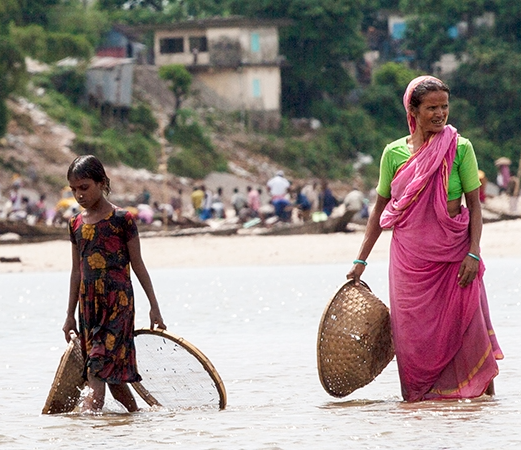
Southwestern Bangladesh is ground zero for the climate crisis. Salinity has penetrated 100km inland, destroying agriculture. Water-logging traps communities for months.

Women suffer first and worst. As fields fail, men migrate for work, leaving women to manage households with scarce resources. Despite this burden, they are systematically excluded from the local governance decisions that determine adaptation funding.

  • Chronic Salinity & Water Scarcity
  • Loss of Traditional Livelihoods
  • Systemic Exclusion from Governance
Climate Impact Bangladesh

Priority Vulnerable Zone

Satkhira, Khulna & Bagerhat Districts

The GLOW Framework

Four strategic pillars to build a foundation of resilience, moving from vulnerability to agency.

Collective Power

Mobilizing 1,500 women into 60 Climate Resilience Groups (WCRGs) to build savings, leadership, and solidarity.

Resilient Livelihoods

Training in saline-tolerant crops, goat rearing, and vermicomposting.

Adaptation Hardware

Deploying 60 Rainwater Harvesting Systems and raising 150 homestead plinths.

Voice in Governance

Integrating women's priorities into Union Parishad budgets via dialogue forums and community risk mapping.

Implementation Plan

A structured roadmap designed to ensure the sustainability and scalability of our interventions.

1. Institutional Building

Phase 1

Activity Details

Formation of 60 Women Climate Resilience Groups (WCRGs). Crucially, these WCRG groups will be formally registered with the Department of Cooperatives and connected to micro-credit institutions.

Rationale

Formal registration grants the groups legal standing, while micro-credit linkage ensures they have access to revolving capital for business expansion beyond the project's grant lifecycle.

2. Livelihood Transformation

Phase 2

Activity Details

Rollout of technical training on saline-tolerant agriculture and livestock management. Distribution of input assets including goats, ducks, and vermicompost units to the most vulnerable households.

Rationale

Moving dependence away from traditional, salinity-sensitive rice farming creates a diversified income portfolio that is robust against climate shocks.

3. Infrastructure & Governance

Phase 3

Activity Details

Construction of 60 Rainwater Harvesting Systems and raising 150 homestead plinths. Simultaneously, establishing dialogue forums between WCRGs and Union Parishads.

Rationale

Hard infrastructure solves immediate survival needs (water/shelter), while governance linkages ensure that future public adaptation funds are allocated to women's priorities.

Expected Outcomes

By the end of the 3-year cycle, GLOW will deliver measurable, lasting improvements in both household income and climate resilience.

Avg. Income Increase

+40%

Resilient Livelihood Adoption

80%

Safe Water Access

100%

Key Metric: Livelihood Adoption

Investment Framework

Component Focus Areas Type
1. Collective Power Mobilization, Leadership Training, Gender Workshops Capacity Building
2. Resilient Livelihoods Asset Transfer, Tech Support Direct Livelihoods
3. Infrastructure 60 RWHs, 150 Plinth Raisings Infrastructure
4. Voice in Governance UP Advocacy, Dialogue Forums, Risk Mapping Advocacy
Ops & MEL Digital Monitoring, Surveys, Audits Operational

Sustainability: The project is built for long-term impact. WCRGs will be institutionalized through formal registration as local co-operatives, giving them legal standing. This, combined with UP budget integration, anchors adaptation in both public policy and local enterprise.

Our Implementation & Partner Network

This project is implemented solely by Khulna Mukti Seba Sangstha (KMSS), a trusted women-led NGO. Our work is amplified and supported by a diverse network of public, private, and civil society partners.

KMSS Logo

Khulna Mukti Seba Sangstha

www.kmssbd.org

Founded in 1997, Khulna Mukti Seba Sangstha (KMSS) is a leading women-led NGO dedicated to serving vulnerable communities. With nearly 1,000 staff and 20 active projects, KMSS combines health, education, governance, and empowerment programs, reaching over 1.5 million people across 13 districts in Bangladesh.

Their deep expertise in community-driven development and strong institutional partnerships with government, donors, and the private sector make them the ideal leader for this initiative.